
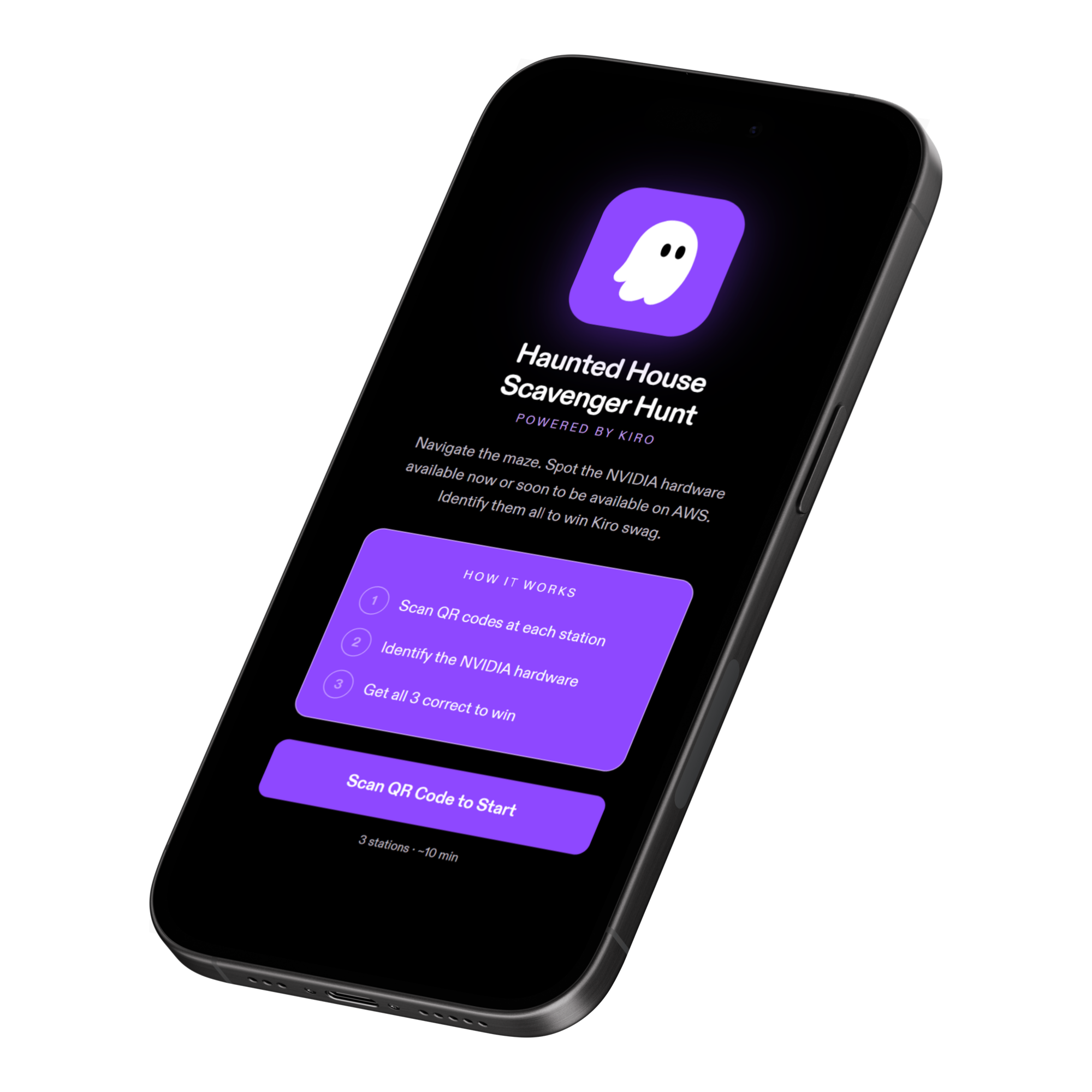
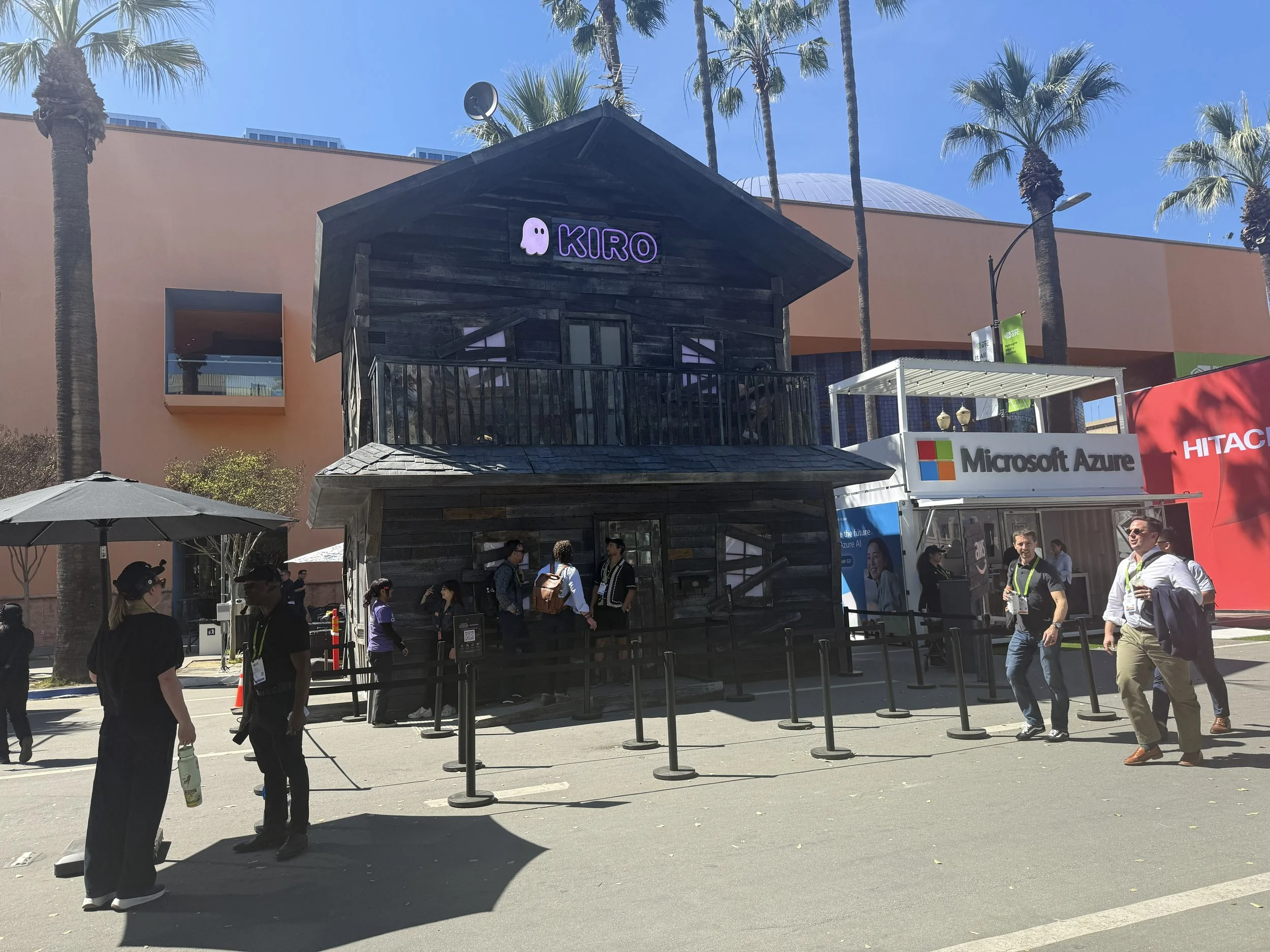
AWS came with a last minute concept they wanted to add to an activation at GTC San Jose 2026. They planned to have visitors complete a scavenger hunt using pieces of paper. Instead, we delivered a live digital experience.
Kiro scavenger hunt
Role
Creative Lead
+ End-to-End Producer
company
Starshot
year
2026
the challenge
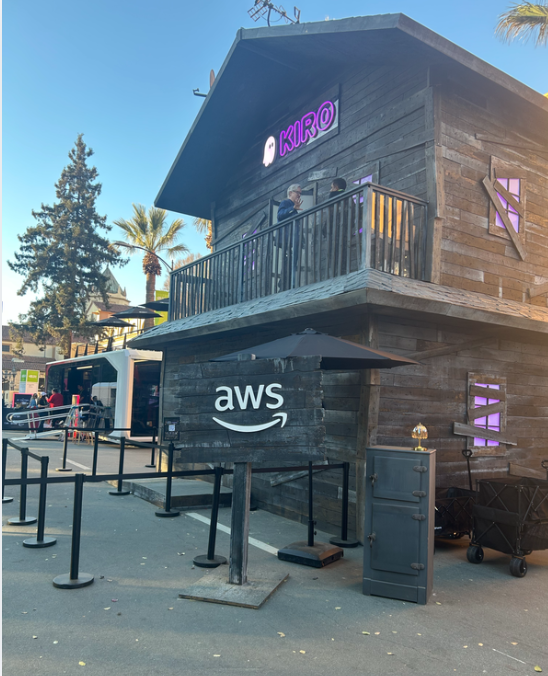
AWS wanted a scavenger hunt experience for GTC San Jose — something that would get conference attendees interacting with the hidden NVIDIA TECH throughout the Kiro haunted house.
The original plan involved physical pieces of paper.
There's nothing wrong with paper. But at a global AI and tech conference, a printed sheet felt like a missed opportunity. If the experience was going to reflect the experience, it needed to be digital, interactive, and built to live in the room.
The timeline to make it happen: two weeks.
The Real Problem
The constraint wasn't just speed. It was the number of handoffs a concept normally travels through before it ships.
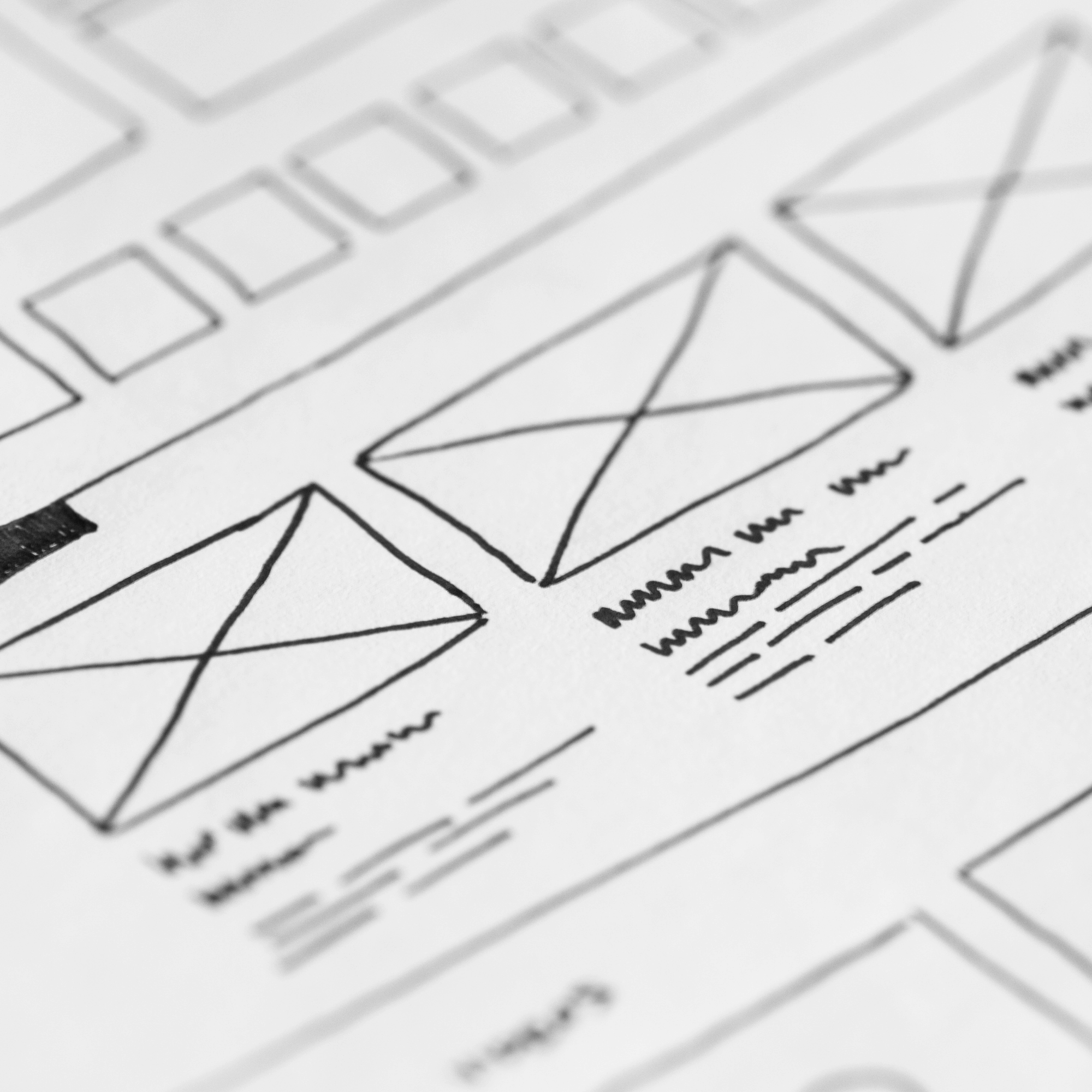
Client vision to creative brief. Brief to prototype. Prototype to dev. Dev to QR code in someone's hand at a conference. We needed to ditch the traditional work flow and leverage AI to make it happen.
What we built
DAy 1: Concep to brief
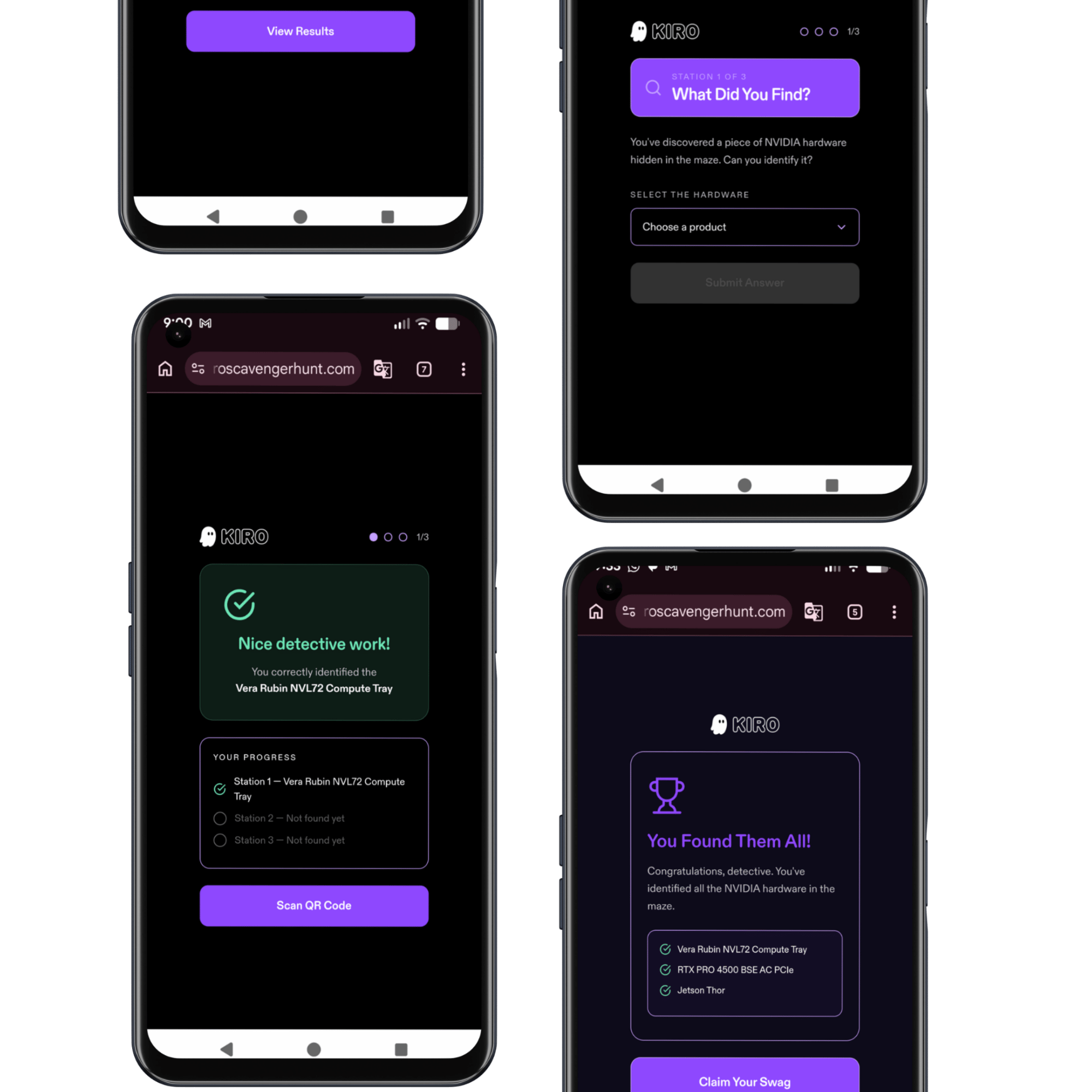
I used Claude to accelerate the structural thinking — game logic, user flow, UX and copy. I turned AWS's vision into a written brief and clickable prototype in a single afternoon. Not a rough sketch. Something a developer could actually build from.
week 1: prototype to build
I stayed in the project and worked with one developer to bring our web app to life. I was in charge of creative direction, brand compliance, copy decisions, and UX calls. The kind of presence that keeps a build from drifting from the original intent.
week 2: build to shipped
Final refinements, QR code integration, event-ready delivery, we were a two person team. Attendees at GTC San Jose scanned a code and walked into a live digital scavenger hunt built from scratch in fourteen days.
the workflow
This is where AI earned its place — not by generating the idea, but by collapsing the distance between idea and artifact.
Claude handled the structural work: game mechanics, logic mapping, UX language. That freed me to stay focused on the creative judgment calls throughout — what the experience needed to feel like at each step.
The speed wasn't about cutting corners. It was about removing the lag that normally lives between thinking and making.
the tension
Two weeks is not a comfortable timeline for shipping a live digital experience. I'm not going to pretend otherwise.
But the AI-assisted workflow didn't just make it possible — it made it better. Because when you can move from concept to testable prototype in an afternoon, you get more iterations, more feedback loops, more chances to get it right before it's real. Speed, used well, is a quality tool.